Meta description: Zendesk renewal costs keep rising. Learn how renewal management software helps you catch waste, control contract risk, and cut unused licenses.
Your Zendesk renewal email shows up. The total is higher than last year. Finance wants a reason. You already suspect part of the bill is dead weight, agents who left, changed roles, went on leave, or barely log in anymore.
The hard part isn't the suspicion. It's proving it before the renewal locks in.
Many organizations still handle this with spreadsheets, calendar reminders, and a last-minute admin review in Zendesk Admin Center. That works until it doesn't. Someone misses a notice window. A manager swears a seat is still needed. Procurement only sees the invoice after auto-renewal. You renew the full count because reducing risk feels safer than reducing spend.
That's where renewal management software earns its keep. Not as a fancy contract repository. As a way to stop paying for software you aren't using.
That Zendesk Renewal Notice Just Landed
You open the notice, skim the line items, and do the same mental math you did last year. How many of these agents are active? Which seats belong to temp staff? Who moved into another system months ago but still has a Zendesk license?
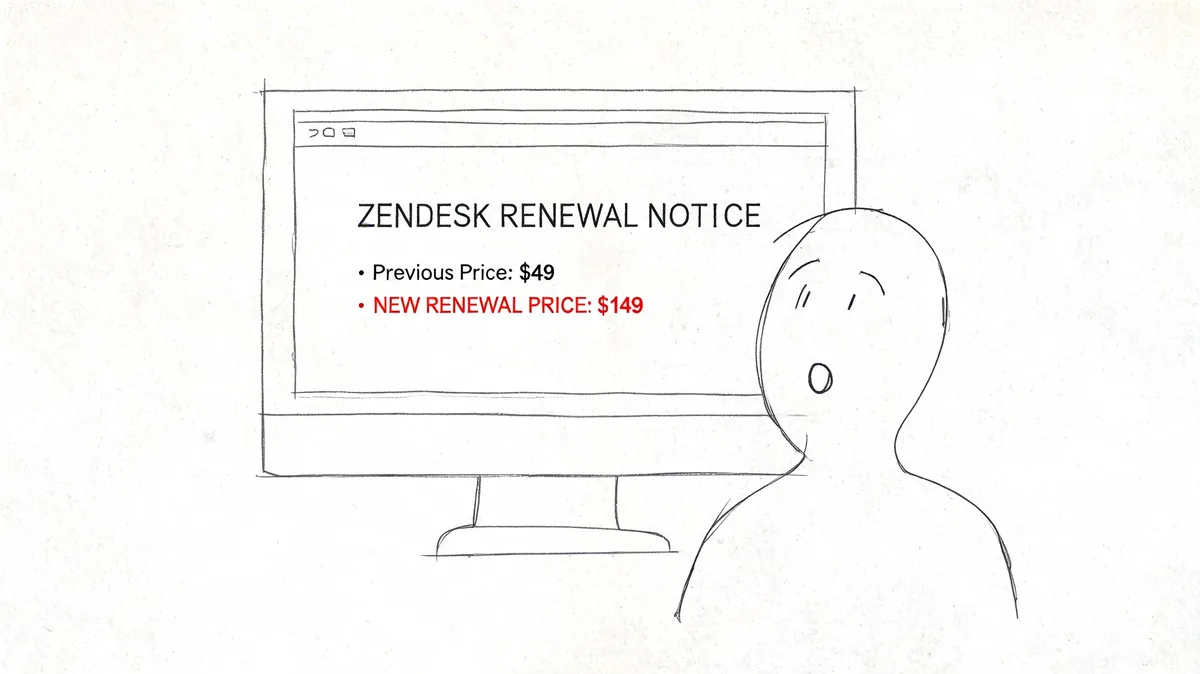
In a mid-market team, this usually turns into a scramble. The Zendesk admin exports users. Team leads get pinged on Slack. Finance asks for a clean answer on what can be cut. Nobody fully trusts the list because "assigned" isn't the same as "used."
I've seen the same pattern over and over. Renewal cost isn't just a pricing problem. It's a visibility problem. If you don't have current usage data and clear ownership, the safest option is to renew too much.
Where the waste hides
A few places tend to create the most noise:
- Role changes: Former support agents keep paid access after moving to ops or QA.
- Leave and attrition: Seats stay assigned because nobody owns cleanup.
- Shared assumptions: Managers think a seat is needed "just in case."
- Thin activity: Agents log in rarely enough that the seat has no real return.
Broad renewal reviews usually catch contract dates. They often miss license waste inside the tool itself.
Why teams over-renew
The common failure isn't laziness. It's timing. By the time the renewal notice lands, you don't have enough runway to audit usage, confirm owners, and negotiate from a stronger position. So the renewal goes through mostly unchanged.
Finance sees a bigger bill. IT sees another year of cleanup deferred.
What is Renewal Management Software Anyway
At a practical level, renewal management software is the system that tracks what you're paying for, when each contract renews, who owns it, and what action needs to happen before money gets committed again.
A spreadsheet can store dates. It can't reliably drive action across IT, finance, procurement, and department owners. That's the gap these tools fill.
It's more than a contract calendar
Good renewal management software keeps a working record of each agreement:
- Renewal dates and notice periods: So you act before auto-renewal.
- Commercial terms: Price, term length, billing model, and renewal owner.
- Approval flow: Who needs to review before renewal or cancellation.
- Usage context: Whether the tool is still earning its cost.
According to Channelnomics' review of renewal management vendors, over 30% of contract renewals regularly lapse without automation, and 91% of technology hardware companies lack a dashboard to track renewal status, upcoming expirations, or customer data. That should sound familiar if your process still lives in inboxes and sheets.
What separates software from a spreadsheet
The useful difference isn't the database. It's the workflow.
A decent platform should help you:
| Capability | Spreadsheet approach | Renewal management software approach |
|---|---|---|
| Renewal tracking | Manual date entry | Central record with alerts |
| Ownership | Often unclear | Named owner and reviewer |
| Notice handling | Easy to miss | Triggered reminders before deadlines |
| Audit trail | Patchy | Logged actions and status changes |
| Usage review | Separate manual export | Can connect to product or system data |
For Zendesk-heavy environments, the strongest setup combines contract visibility with license visibility. If you're reviewing the contract but not the active seat count, you're only managing half the problem.
If you're sorting through broader tooling as well, this guide to SaaS license management software is a useful companion because license governance and renewal control are tightly linked.
Practical rule: If a tool can't show owner, renewal date, notice window, and current value, it isn't being managed. It's being tolerated.
Core Features That Actually Matter
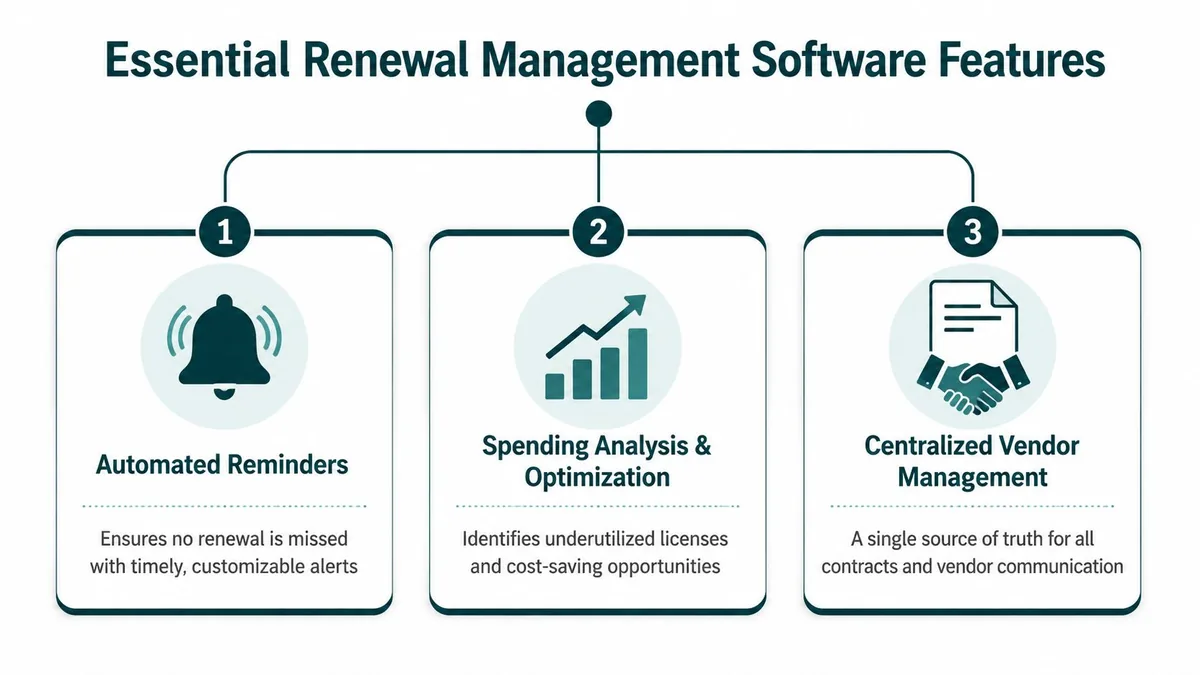
Feature lists get noisy fast. Most buyers don't need another dashboard. They need fewer missed deadlines, fewer approval bottlenecks, and fewer wasted seats.
Central repository with real ownership
Start with the boring part. It matters most. Every contract should sit in one place with a clear owner, renewal date, notice period, and commercial summary.
Without that, teams waste time answering basic questions:
- Who owns this vendor
- When do we need to give notice
- Which team is paying
- What changed since the last term
The repository isn't valuable because it stores PDFs. It's valuable because finance, IT, and ops all work from the same record.
Automated workflows that move work forward
Many teams find significant relief. According to Malbek's analysis of contract renewal management, automated workflow engines reduce manual approval cycles from 10-15 days to 2-3 days, cut error rates by 40%, and prevent auto-renewal penalties that average $50K-$200K annually in mid-market firms.
That matters because a missed notice period isn't just an admin mistake. It can lock you into another term before anyone has reviewed usage or pricing.
What works in practice:
- Pre-renewal alerts: Trigger reviews well before the notice window.
- Conditional routing: Send low-risk renewals one way, disputed renewals another.
- Approval logging: Keep a record of who signed off and when.
What doesn't work:
- Reminder-only setups: Alerts without assigned actions still get ignored.
- Manual handoffs: Email chains create delays and lost context.
- Single-owner dependency: If one admin is out, the process stalls.
Integrations that reduce blind spots
Integration quality matters more than feature count. If the tool can't pull data from the systems where your team works, it becomes another place to maintain by hand.
For most mid-market teams, these integrations matter first:
| Integration | Why it matters |
|---|---|
| CRM | Connects renewal timing to account and commercial context |
| Billing platform | Confirms term, invoicing, and renewal amount |
| E-signature | Speeds amendments and approvals |
| Zendesk or other app APIs | Brings usage into the renewal decision |
The trade-off is real. Enterprise platforms often support deeper workflows but take longer to set up and maintain. Lighter tools get you moving faster, but they may stop at reminders and contract storage. For Zendesk spend control, that's often not enough.
Calculating the ROI of Proactive Renewals
The finance case for renewal management software gets stronger when you stop framing it as admin overhead. It's a profit protection function. It helps you avoid avoidable spend, forecast committed software cost, and cut the habit of renewing on autopilot.
The metrics finance will care about
A few renewal metrics help separate surface activity from actual control. Dock's guide to calculating renewal rates calls out Gross Renewal Rate (GRR) and Logo Renewal Rate as key measures, with GRR targets of 85-90% for mid-market. The same source notes that the average company auto-renews 89% of its 135 applications, which is a strong signal that many renewals happen with weak oversight.
Here's the plain-English version:
- GRR: How much recurring revenue you kept from the renewal base.
- Logo Renewal Rate: How many customers renewed, regardless of deal size.
- NRR: Whether retained customers expanded enough to offset churn and contraction.
For a finance lead, those aren't just customer success metrics. They show whether the company can predict recurring revenue and whether contract management is disciplined.
Internal ROI matters too
If you only measure renewal management by customer retention, you miss a major savings category. Internal software waste is often easier to fix than customer churn because you control the inputs.
Zendesk is a good example. A seat that's assigned but inactive has no upside. You're paying full price for zero output.
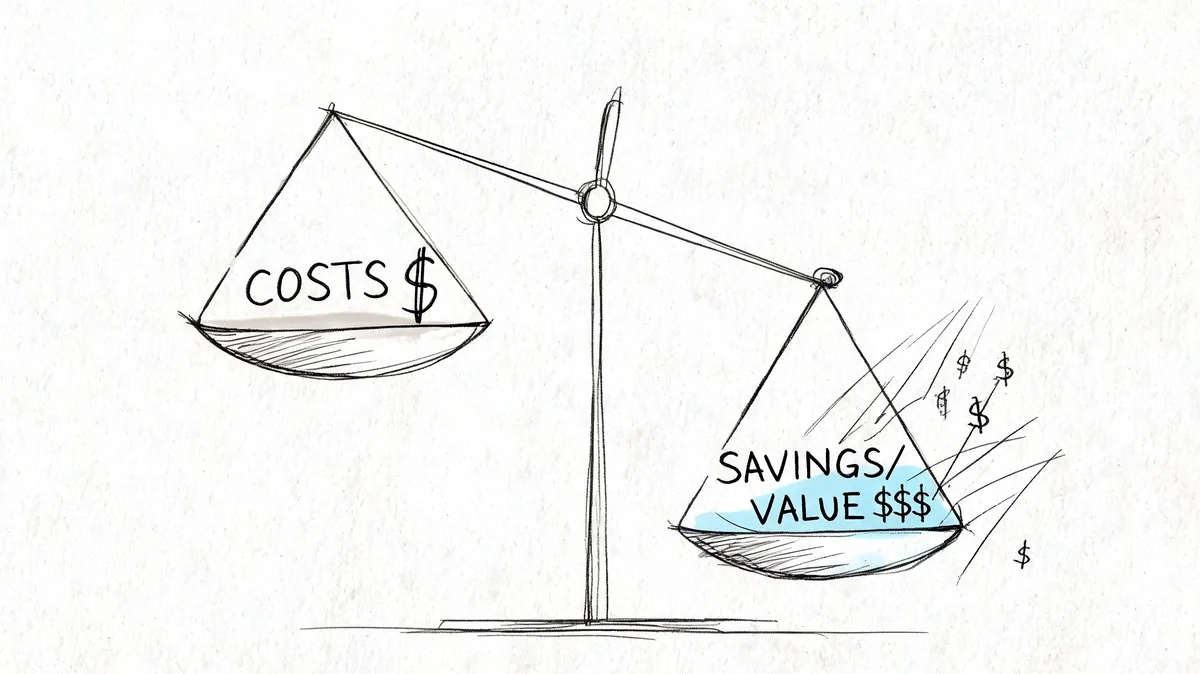
A quick visual can help frame the discussion with leadership:
The best ROI cases usually come from preventing bad renewals, not from managing good ones more neatly.
What a sound ROI model includes
Use a short model that finance can review quickly:
- Avoided waste: Seats, apps, or contracts you can reduce before renewal.
- Avoided penalties: Fees or lock-ins caused by missed notice windows.
- Time returned: Less manual review and fewer approval delays.
- Forecast quality: Fewer surprises in software spend and committed renewals.
That gives you a cleaner business case than "better visibility." Visibility only matters if it changes the renewal decision.
Example Finding Waste in Your Zendesk Account
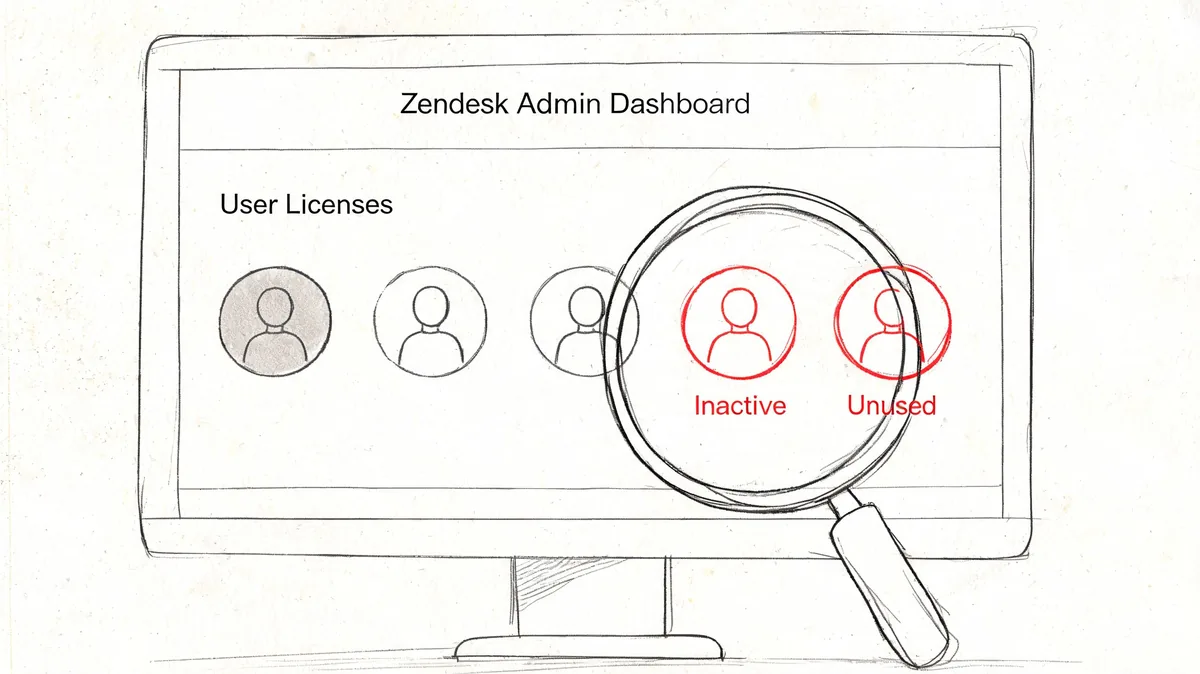
Broad renewal platforms help you track dates and contracts. They usually don't tell you whether a Zendesk agent seat is earning its cost.
That's the blind spot. Finance approves the renewal based on contract terms. IT knows the user list is messy. Support managers know staffing has changed. Nobody has a clean, current view of idle seats tied to the renewal amount.
What a useful review looks like
A Zendesk-specific review should focus on actual agent activity, not just whether a user account exists. You're trying to answer a practical question: should this seat renew at the current plan level, be downgraded, or be removed?
HubSpot's customer success renewals article notes that 70% of CS leaders focus on retention pipelines, while finance and procurement teams report 22% wasted spend on idle support licenses. It also points out that broad platforms often lack plan-agnostic monitoring for tools like Zendesk.
That lines up with what teams run into on the ground. General renewal tools know the invoice. They often don't know that an assigned Suite or Support seat hasn't seen meaningful use.
The annual cost of unused Zendesk licenses
Using the pricing in the brief, idle agent seats cost the following on annual billing:
| Zendesk Plan | Annual Cost Per Agent | Cost of 5 Unused Agents/Year |
|---|---|---|
| Suite Team | $660 | $3,300 |
| Growth | $1,068 | $5,340 |
| Professional | $1,380 | $6,900 |
| Enterprise | $2,028+ | $10,140+ |
A few idle seats don't look dramatic on the user page. They look very different on a finance review.
Where specialized tools fit
Targeted tooling is more useful than another generic contract dashboard. For Zendesk, you want a read-only connection to the API, clear inactivity rules, and a report you can hand to finance before the renewal date. If you're trying to build that review process internally, this article on reducing Zendesk cost is a practical place to start.
Review seats by behavior, not by habit. "They might need it later" is not a renewal strategy.
Your Checklist Before the Next Renewal Cycle
You don't need a massive process reset to improve renewals. You need a repeatable review that starts early enough to matter.
Build the minimum control layer
Start here:
- List every renewal owner: Each contract needs one accountable person.
- Capture notice windows: The invoice date isn't the date that matters most.
- Store the latest agreement: Finance and IT should review the same document.
- Mark high-risk renewals: Auto-renewing tools with unclear usage go to the top.
Add usage before you approve spend
For Zendesk and other seat-based tools, contract review isn't enough. Pull actual activity and compare it with assigned licenses.
Use this short test:
| Check | What you're looking for |
|---|---|
| Assigned vs active users | Seats that exist but aren't earning value |
| Plan level by user | Users sitting on a higher tier than needed |
| Department ownership | Whether the manager still wants the seat |
| Renewal timing | Enough lead time to reduce or renegotiate |
Use automation where it removes manual review
The biggest win from AI in this category isn't flashy forecasting. It's getting contract data out of documents accurately enough that teams stop missing dates and notice periods. Articsledge's overview of renewal management software says AI-powered contract data extraction reaches 95-98% accuracy for renewal dates and notice periods, compared with 70-80% for manual review, and can reduce revenue leakage by 15-25%.
That doesn't replace judgment. It gives your team a better starting point.
If renewal discussions are coming up soon, pair your internal usage review with a negotiation checklist like this guide to negotiating software contracts. It helps once you've identified what should renew.
The working checklist
- Start 90 days out: Give IT, finance, and managers time to review.
- Validate usage first: Don't argue pricing before you know seat demand.
- Document keep, cut, and downgrade decisions: Verbal agreement won't hold.
- Escalate exceptions early: Edge cases always take longer than expected.
- Review post-renewal cleanup: Fix ownership and license hygiene before the next cycle.
The point isn't to become perfect at renewals. It's to stop being surprised by them.
If your next Zendesk renewal is coming up, LicenseTrim can help you quantify unused agent spend before you commit. It connects to Zendesk with read-only OAuth access, checks real usage, and shows where idle seats are inflating your renewal cost so you can make changes before the invoice becomes a sunk cost.