Meta description: Zendesk renewal coming up? Use agent activity data to negotiate software contracts, cut wasted licenses, and get better renewal terms.
Your Zendesk renewal lands in your inbox. The rep wants a quick call. Finance wants a forecast. Your support leads swear they need every seat. Meanwhile, you know at least a few agents haven’t logged in for weeks.
That's often where money is lost.
They negotiate from the quote, not from usage. They argue about discount percentages before they’ve proven how many licenses they need. Bad move. If you’re negotiating software contracts for Zendesk, your best argument isn’t charm, urgency, or a vague threat to switch vendors. It’s usage data.
That Zendesk Renewal Email Just Landed
You open the email and see the usual pattern. Renewal date. Updated pricing. A nudge to “secure your term early.” Maybe there’s a plan change buried in the paperwork. Maybe there’s just a higher bill and a friendly note from your account rep.
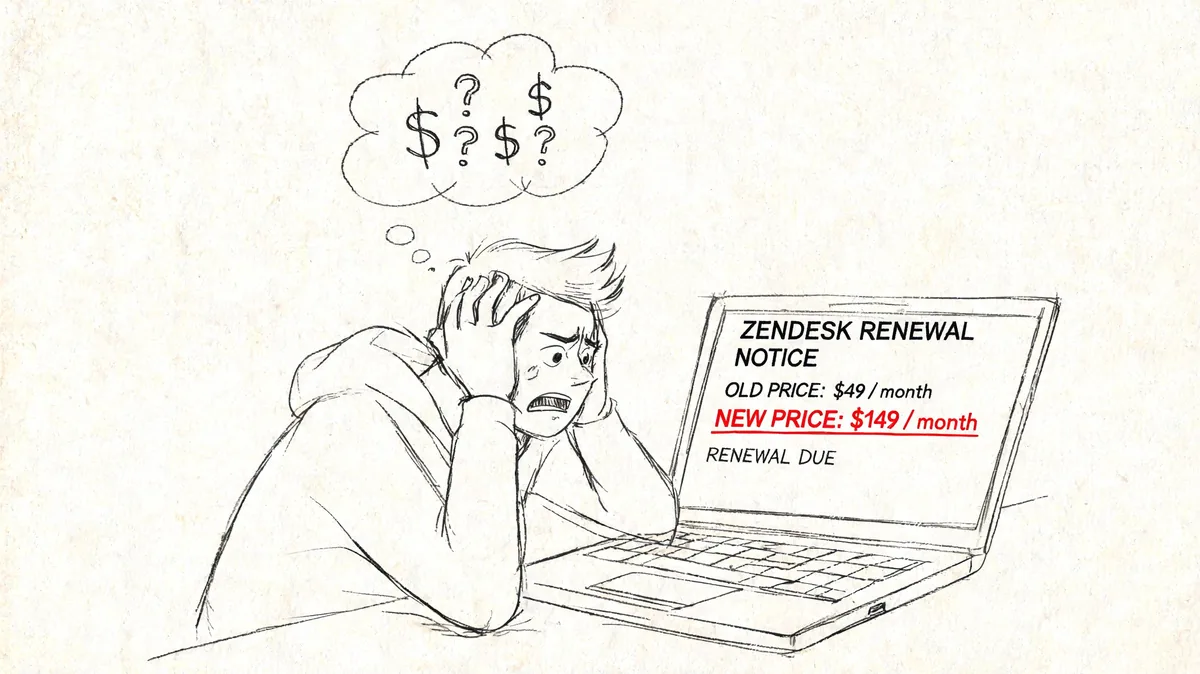
If you manage Zendesk day to day, you already know the problem. Per-agent pricing gets expensive fast. One team adds seats “just in case.” Another keeps former power users on full licenses long after their role changed. Nobody wants to remove access and break coverage, so waste stays hidden until renewal.
That’s why the first conversation shouldn’t be “Can you do better on price?”
It should be “Here’s what we use.”
Organizations that actively negotiate SaaS contracts typically achieve 10-30% cost savings, and mid-market deals often secure 10-20% discounts when they push back with structure instead of accepting the first proposal, according to Yousign’s write-up on SaaS contract negotiation strategies.
Practical rule: Never discuss a Zendesk renewal quote until you can name your active agents, your idle agents, and the cost of carrying both.
Most admins already feel the waste. What they lack is proof. Once you have that proof, the whole negotiation changes. You stop asking for a favor and start correcting a bad fit between contract and reality.
Gather Your Data Before You Talk Price
Start with the audit. Not the vendor call. Not the legal redlines. The audit.
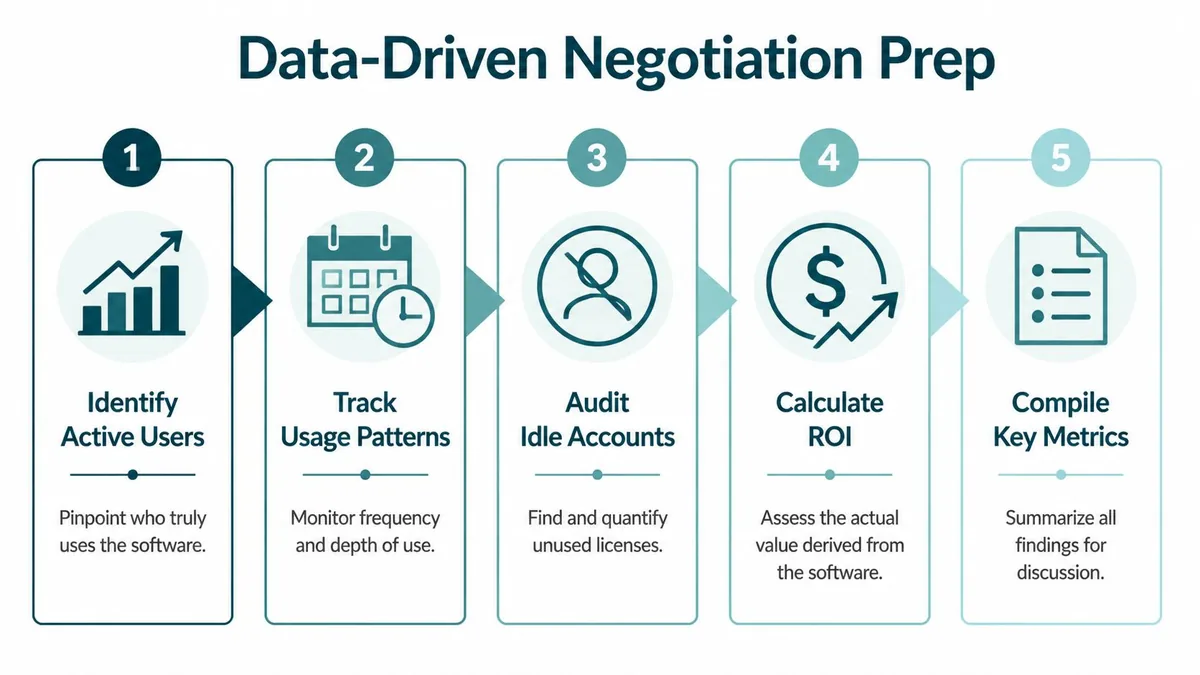
A technical approach to negotiation begins with API-driven usage analysis. Teams that pull 90-day activity metrics from the Zendesk API often find over 30% idle seats, which gives them hard evidence for the discussion, as noted in this negotiation overview from the Program on Negotiation at Harvard.
What to pull from Zendesk
You want facts that survive scrutiny. Pull data that shows whether a paid agent license is being used.
Focus on:
- Recent activity: Last login and recent agent activity
- Role fit: Who needs a full agent seat versus lighter access
- Team patterns: Shared inbox teams often over-assign seats
- Exceptions: On leave, seasonal staff, and temporary projects
- Cost mapping: Match each inactive seat to its monthly contract cost
If you’ve ever tried doing this in Zendesk Admin Center with exports and manual cleanup, you know it’s messy. You can get there, but it takes time, and the output usually lands in a spreadsheet that nobody trusts by the second meeting.
For a cleaner process, use the Zendesk API directly or review a guide on software license auditing for SaaS teams before you touch the renewal quote.
The hard way versus the smart way
Here’s the difference.
| Approach | What happens | Problem |
|---|---|---|
| Manual export | You pull users, compare login dates, and build your own model | Slow, easy to miss context |
| Admin anecdotes | Managers tell you who “probably needs access” | Not credible in negotiation |
| API-based audit | You pull actual activity and map it to paid seats | Gives you defensible numbers |
A vendor rep can brush off opinion. They can’t easily dismiss a list of named users with no meaningful activity over a 90-day window.
Use that data to build a one-page summary before the first pricing call. Keep it tight.
Include:
- Total paid agent seats
- Seats with no meaningful recent activity
- Users who can be downgraded or removed
- Annual cost of those unused licenses
- Your requested contract changes
Don’t bury the lead. The lead is wasted spend.
A short walkthrough helps if your stakeholders need to see what good prep looks like:
What to bring into the meeting
Most renewal calls drift because the buyer arrives with questions instead of positions. Fix that.
Bring three things:
- Your baseline: Current seat count and actual usage
- Your ask: Remove or downgrade inactive licenses before any renewal pricing discussion
- Your fallback: If the vendor resists, ask for pricing protection, flexible seat adjustments, or a shorter term
Go into the call with a document, not a feeling. Vendors negotiate against paper.
If you do that, you control the frame. The rep wants to talk about package value. You keep the conversation on paid seats that aren’t being used.
Key Terms to Negotiate Beyond the Price Tag
Price matters. It’s not the whole contract.
Plenty of teams win a discount and still get trapped by bad terms. Then six months later they’re paying for seats they can’t unwind, arguing over support credits, or getting cornered into a true-up they should have blocked in writing.
According to a cited Gartner point in ProcureAbility’s software contract negotiation article, 62% of enterprises reduced their SaaS costs by over 20% by doing granular license audits and negotiating usage-based clauses, not just list price.
Seat flexibility
For Zendesk, this is usually the biggest non-price issue.
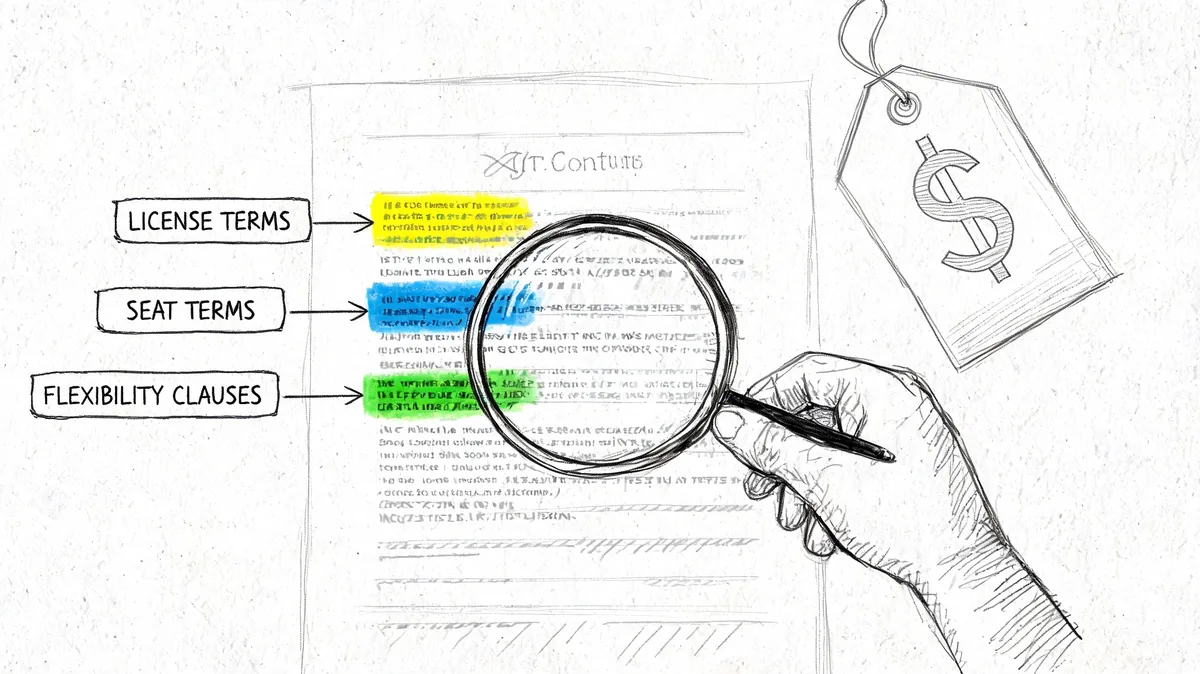
You want contract language that lets you adjust seat count when usage drops. If your support team shrinks, reorganizes, or consolidates shifts, you should be able to remove or downgrade licenses without waiting for the next painful renewal cycle.
Good terms usually cover:
- Downgrade rights: Move inactive users off higher-cost plans
- Removal timing: Reduce seats during the term or at defined checkpoints
- True-up limits: Cap surprise charges for short-term spikes
- Renewal review: Rebaseline seats before auto-renewal takes effect
If your legal team needs a refresher on the umbrella agreement around these terms, send them a plain-English guide on what an MSA agreement is.
SLA language that actually matters
Teams often glance at the SLA and move on. That’s lazy.
You need clear service commitments, clear support response expectations, and clear credits if the vendor misses them. Vague service promises don’t help when your support team is down and customers are piling up.
Look for language that answers:
| Contract area | Weak version | Better version |
|---|---|---|
| Uptime | General availability wording | Specific uptime commitment with service credits |
| Support | “Commercially reasonable efforts” | Defined response targets by severity |
| Escalation | Informal account management path | Named escalation path and support process |
If the SLA only protects the vendor, it’s not doing its job.
Audit and data terms
You also need to watch audit language. Some SaaS agreements give vendors broad room to review use, declare overages, and invoice on their timeline. That’s fine for them. Not for you.
Push for terms that say how usage is measured, when reviews happen, and how disputes get handled. If your internal records and their billing records don’t match, the contract should give you time to reconcile the difference before money changes hands.
A few things I’d redline every time:
- Audit notice: No surprise audit window
- Measurement method: Defined usage source and review period
- Dispute process: Time to review findings before payment
- Termination rights: Clear path out if pricing or service changes go sideways
Negotiate software contracts like the bill will still matter in month ten, because it will.
Sample Language for Your Negotiation Emails
Many individuals make renewal emails too polite and too vague. They ask if the vendor can “sharpen pricing.” They hint at budget pressure. They hope the rep volunteers something useful.
Don’t do that.
Use direct language tied to evidence. Also, know your BATNA. Negotiators with a strong BATNA secure 42% better terms on average, and “tie a string” trades, like offering a longer term only if unused licenses are removed, lead to better outcomes, according to the Wikipedia overview of negotiation methods.
Negotiation Scripts for Zendesk Renewals
| Vendor Statement | Your Data-Backed Response |
|---|---|
| “We’ve sent over your standard renewal quote.” | “We’ve completed a usage review and won’t discuss renewal pricing until inactive and low-use licenses are addressed in the proposal.” |
| “Your current seat count is the right fit for coverage.” | “Our internal usage data shows a gap between paid seats and actual activity. Revise the quote to reflect active users first.” |
| “The best pricing comes with a longer commitment.” | “We’ll consider term length after seat count and downgrade rights are corrected. We won’t lock in waste.” |
| “Our contract terms are standard.” | “Standard for the vendor isn’t the standard for us. We need written flexibility on seat reductions, renewal review, and support commitments.” |
| “If usage grows, this quote protects you.” | “We’ll pay for growth when it happens. Today’s contract needs to match today’s usage, not a forecast.” |
| “We can discuss discounts after signature timing is confirmed.” | “We’re prepared to move on timing once the proposal reflects actual usage and the contract includes the operational terms we requested.” |
Phrases worth using
A few lines work better than most because they’re firm without sounding theatrical.
- Use evidence first: “Our review shows paid licenses that don’t match actual activity.”
- Separate issues: “We need seat corrections resolved before we discuss term length.”
- Trade, don’t give: “If you want a longer commitment, we need flexibility on removals and renewals.”
- Force written clarity: “Please send that in redline form so we can review exact language.”
- Keep alternatives real: “If we can’t align contract terms with usage, we’ll evaluate other options.”
For templates and structure, it helps to keep a reusable set of SaaS contract templates for internal review.
Don’t reward a bad proposal with a fast reply. Slow down, write the ask clearly, and make the vendor respond to your points one by one.
One email I’d actually send
Here’s the tone I’d use:
We’ve reviewed current Zendesk usage and found that the renewal proposal doesn’t reflect actual seat demand. Please revise the quote to remove or downgrade inactive licenses before we discuss term or pricing changes. We also need written language covering seat flexibility, renewal review, and support commitments. If you can send an updated proposal and redlines, we can move quickly.
Short. Specific. Hard to misread.
After the Deal Is Signed Your Work Isnt Over
Signing day isn’t the finish line. It’s the handoff from negotiation to governance.
If you don’t track what you won, the savings disappear. Seats creep back up. Inactive agents pile up again. The next invoice drifts away from the deal you thought you signed.
A 2026 Flexera point cited by ProcureCon IT says 35% of mid-sized firms waste over $500,000 annually on unmonitored software licenses because they lack inactivity rules. That’s exactly why post-signature monitoring belongs in the contract and in your operating routine.
Build a renewal file now
Don’t wait until next year to reconstruct what happened.
Keep one place with:
- Final pricing terms: Approved rates, term dates, and any caps
- Seat rules: Downgrade rights, review windows, and approval steps
- SLA terms: Credits, response commitments, and escalation contacts
- Invoice checks: What finance should verify on every bill
- Usage review cadence: Who checks activity and when
Make contract terms operational
A negotiated concession that nobody monitors is worthless.
If you won flexibility on inactive seats, assign someone to review that monthly. If you negotiated support credits, make sure incidents get logged against the SLA. If the contract says pricing changes require notice, keep the dates in your calendar now, not a week before renewal.
Signed terms don’t save money. Teams enforcing signed terms save money.
That’s also where ongoing monitoring earns its keep. A tool like LicenseTrim can watch Zendesk usage with read-only access, flag inactive agents, and keep you from slipping back into spreadsheet cleanup right before renewal. That’s not about buying software for the sake of it. It’s about making sure the next negotiation starts with current facts instead of detective work.
The goal is boring discipline. Fewer surprises. Cleaner invoices. Better renewal posture every year.
If your Zendesk renewals keep turning into last-minute budget fights, start with a usage audit. LicenseTrim connects to Zendesk via OAuth, finds inactive agents, and shows the cost of wasted licenses so you can go into the next renewal with proof instead of guesswork.